Chicago Nonprofit Jobs
Explore Chicago neighborhoods, sectors, employers and mission-driven careers in the state's largest market.
Explore Chicago Jobs →
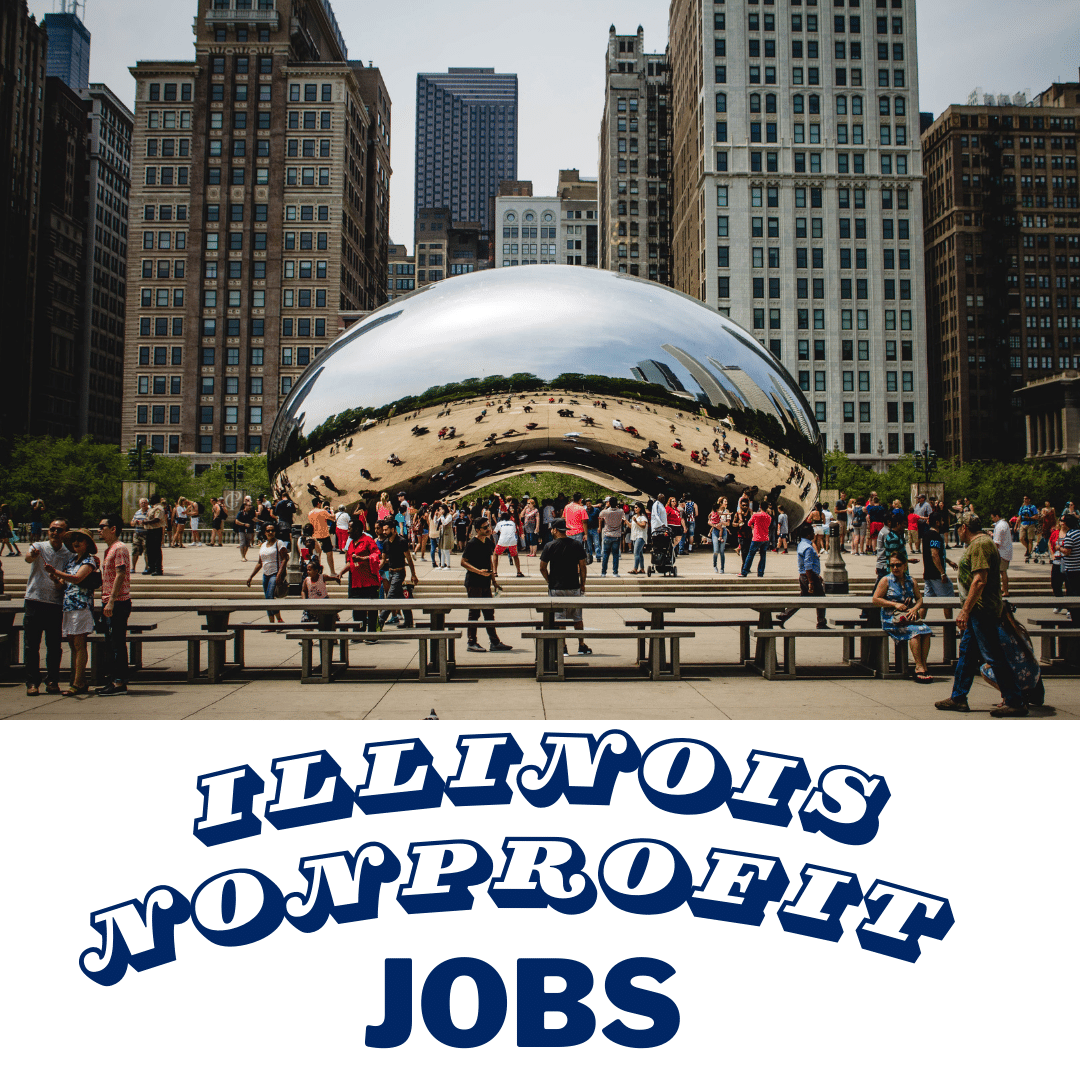
Search nonprofit jobs across Chicago, Cook County, Evanston, Oak Park, Naperville, Aurora, Joliet, Rockford, Peoria, Springfield, Bloomington-Normal, Champaign-Urbana, the Metro East and communities throughout Illinois. Explore careers in healthcare, education, philanthropy, human services, housing, fundraising, arts, advocacy, research, community development and nonprofit leadership.
Current IRS-based data compiled by ProPublica identify more than 80,000 active tax-exempt organizations operating in Illinois, including more than 62,000 501(c)(3) organizations. Bureau of Labor Statistics research also shows that nonprofits account for a substantial share of Illinois private employment.
Current ProPublica nonprofit data show a remarkably broad Illinois tax-exempt sector.
Charitable organizations form the largest part of the state's mission-driven landscape.
BLS data identify approximately 569,998 Illinois employees working for nonprofit organizations.
Illinois nonprofits collectively report enormous economic activity alongside their community missions.
Chicago contains the state's densest concentration of major nonprofit institutions, but a statewide search can uncover healthcare, education, philanthropy, human-service and community-development employers in almost every Illinois region.
Healthcare systems, universities, foundations, museums, human-service agencies, associations, arts organizations, advocacy groups and national nonprofit headquarters make Chicago one of America's deepest mission-driven labor markets.
Evanston, Oak Park, Skokie, Schaumburg and surrounding communities support healthcare, education, disability services, community foundations, social services and regional associations.
Healthcare, education, faith-based institutions, associations and human-service organizations create professional and community-facing careers outside Chicago proper.
Youth services, healthcare, immigrant and family services, arts, education and community-development organizations serve rapidly changing suburban communities.
Healthcare, workforce development, education, housing, community services and youth programs create a distinct southwestern metropolitan job market.
The University of Illinois anchors careers in education, research, healthcare, student services, international programs and community organizations.
OSF HealthCare and other regional institutions make healthcare particularly important, alongside education, arts, philanthropy and community-service organizations.
Associations, public policy, advocacy, healthcare, education and statewide nonprofit organizations benefit from proximity to Illinois government.
Healthcare, workforce, arts, family services, food security and neighborhood organizations serve a major regional population center.
Higher education, healthcare, community foundations, arts, youth programs and statewide associations contribute to a diverse local mission economy.
Regional healthcare, cultural institutions, foundations, education and community organizations serve both sides of the Illinois-Iowa metropolitan area.
Healthcare, higher education, rural health, food security, community development and human services create mission-driven careers across Southern Illinois.
Many of Illinois' largest nonprofit employers are headquartered in Chicago or the surrounding metropolitan area. Healthcare, universities, philanthropy, museums, associations and national organizations make the region especially strong for specialized professional and leadership roles.
Job seekers who can work elsewhere in Illinois should also search regional healthcare systems, universities, community foundations and direct-service organizations in Peoria, Springfield, Rockford, Champaign-Urbana and other cities. Different locations may offer very different compensation, commutes, housing costs and career opportunities.

The current Illinois page correctly recognizes that the nonprofit sector extends well beyond social services. This expanded guide connects major Illinois mission areas with the professional skills organizations need to operate.
Nonprofit hospitals, academic medical centers, clinics, behavioral-health providers and public-health organizations are major Illinois employers.
Universities, colleges, schools, early-childhood programs, student services and education nonprofits employ professionals statewide.
Family services, disability organizations, aging programs, crisis support and direct community services create broad career paths.
Private foundations, community foundations, donor services, grantmaking and institutional philanthropy are particularly visible in Chicago.
Affordable housing, supportive housing, shelters, homelessness prevention and community development require program and professional talent.
Illinois is home to hunger-relief organizations ranging from local food pantries to Feeding America, a major national network.
Museums, theater, music, cultural institutions, historic organizations and arts education enrich communities throughout Illinois.
After-school programs, mentoring, recreation, education and family-support organizations operate in urban and rural communities.
Chicago and Springfield support legal services, public policy, civil rights, immigrant advocacy and statewide coalitions.
Great Lakes protection, land conservation, agriculture, parks and environmental justice create specialized nonprofit careers.
Chicago and Springfield are strong markets for professional associations, membership organizations and government-affairs work.
Shelters, rescue organizations, veterinary programs and animal advocacy groups employ program, fundraising, communications and operational professionals.

Illinois is home to major public and private universities, community colleges, independent schools and education nonprofits. Job seekers should look beyond faculty titles and consider advancement, student affairs, research administration, grants, communications, finance, HR, technology and program operations.
Chicago, Evanston, Champaign-Urbana, Bloomington-Normal, DeKalb, Carbondale and other university communities can provide mission-driven career paths that combine education with research, community engagement, healthcare and philanthropy.
Explore University & College CareersThis is not a ranking and does not imply that every organization below is hiring today. It is a practical map of recognizable Illinois institutions worth researching as you build a targeted career search.
Healthcare, research, operations and professional roles within one of the state's largest nonprofit health systems.
Explore Careers →Clinical, operational, administrative and professional healthcare careers throughout northeastern Illinois.
Explore Careers →Academic medicine, research, patient care and professional careers.
Explore Careers →A major Illinois nonprofit healthcare network with clinical and professional opportunities beyond Chicago.
Explore Careers →Healthcare careers across central Illinois, including professional, administrative and clinical functions.
Explore Careers →Pediatric healthcare, research, administration, philanthropy and professional careers.
Explore Careers →Research, education, administration, advancement, student services and professional opportunities.
Explore Careers →Academic, research, administration, advancement and professional university careers.
Explore Careers →Higher education, research, extension, student services and administrative careers.
Explore Careers →Education, research, student services, advancement and professional university opportunities.
Explore Careers →Academic programs, administration, student support, advancement and university operations.
Explore Careers →Academic, administrative, student-service and institutional careers.
Explore Careers →Community philanthropy, grantmaking, partnerships and regional investment.
Explore the Trust →Major national and global philanthropy with grantmaking, program, investment and operational functions.
Explore Careers →A nationally significant hunger-relief organization headquartered in Illinois.
Explore Careers →Illinois' statewide association serving nonprofits, grantmakers and social-impact organizations.
Explore Forefront →Community investment, nonprofit partnerships and regional impact programs.
Explore United Way →Food distribution, programs, community partnerships, advocacy and fundraising careers.
Explore Careers →Illinois nonprofit compensation varies significantly by professional function, organization size, geography, budget, staff responsibility and funding model. A finance director at a major Chicago hospital and a finance director at a small rural organization should not be treated as one compensation market.
Since January 1, 2025, the Illinois Equal Pay Act generally requires employers with 15 or more employees to include a position's pay scale and benefits in covered internal and external job postings when the position will be performed at least partly in Illinois or reports to an Illinois supervisor, office or work site.
This gives Illinois job seekers meaningful information before an interview begins. Use the disclosed range to compare your experience with the job's scope, then evaluate health insurance, retirement, paid leave, hybrid flexibility and other benefits as part of total compensation.
Read Illinois Department of Labor guidance →Participating employers contributed statewide compensation data.
The survey draws on thousands of Illinois nonprofit employees.
Roles span programs, development, finance, HR, IT, medical services, research and more.
Benchmark development against development, finance against finance and program leadership against comparable program roles.
Chicago compensation and housing costs may differ from Peoria, Springfield, Rockford or Southern Illinois.
Budget, staff size, complexity and revenue responsibility can change the market value of the same title.
The high end does not automatically represent the expected starting salary for every qualified applicant.
Healthcare, retirement contributions, PTO, flexibility and professional development can materially affect total value.
If a role depends on a particular grant or government contract, understand how long that funding currently extends.
Rather than claiming that every role below is growing at the same rate, this section identifies functions that repeatedly matter across Illinois' largest nonprofit ecosystems and current mission-driven hiring.
Major gifts, annual giving, institutional giving, campaigns, grant writing and donor relations remain central to nonprofit sustainability.
Organizations need professionals who can manage staff, budgets, partners, services and measurable outcomes.
Illinois' large nonprofit healthcare system creates demand across both clinical and nonclinical functions.
Restricted grants, government contracts, audits and complex revenue models make nonprofit finance expertise valuable.
Grant administration, reporting and contract compliance support organizations dependent on institutional and public funding.
Organizations need people leaders who understand recruitment, employee relations, compensation and workforce sustainability.
Funders, boards and government partners increasingly expect organizations to explain outcomes using credible evidence.
Nonprofits need professionals who can communicate mission, build audiences, support fundraising and strengthen public trust.
Senior leaders must balance mission, funding, governance, talent and complex organizational operations.
| Professional function | Healthcare | Education | Foundations | Human services | Arts | Associations |
|---|---|---|---|---|---|---|
| Programs | ||||||
| Development | ||||||
| Finance | ||||||
| Grants | ||||||
| HR | ||||||
| Data / Evaluation | ||||||
| Technology |
Start with the work you already know how to perform rather than searching only for the word “nonprofit.”
Healthcare, education, philanthropy and human services have different employers, funding models and professional vocabularies.
If geography allows, run separate searches for Springfield, Peoria, Rockford, Champaign-Urbana and other Illinois markets.
Illinois pay transparency gives many candidates compensation and benefit information before an interview.
Understand whether the organization depends primarily on donors, grants, contracts, healthcare revenue, tuition or membership.
A statewide nonprofit may require travel even when its administrative office is located in Chicago or Springfield.
Finance, HR, technology, marketing and operational skills can transfer well when you explain how they solve a nonprofit need.
Show funds raised, budgets managed, people served, programs improved, employees supported or systems strengthened.
Attend nonprofit, fundraising and association events to understand organizations and career pathways before asking about openings.
Tailored applications to organizations you understand are usually more persuasive than repeatedly sending one generic resume.
Networking works best when it begins with curiosity rather than a request for employment. Learn which organizations are active, which issues matter locally and which professional communities can help deepen your expertise.
Illinois professionals can combine statewide resources, Chicago associations, fundraising groups, volunteer experiences and issue-specific organizations to build a much stronger understanding of the mission-driven employment market.

Illinois' statewide association serving nonprofits, grantmakers, advisors and social-impact organizations.
Explore Forefront →Career resources, professional networking and nonprofit community information for Chicago-area professionals.
Explore YNPN Chicago →Professional development and networking for fundraising, development and philanthropy professionals.
Explore AFP Chicago →Research nonprofits, foundations, funders and grantmaking before applications and interviews.
Explore Candid →Learn nonprofit governance, board responsibilities and organizational leadership.
Explore BoardSource →Explore volunteer and civic-engagement opportunities and learn more about community organizations.
Explore Chicago Cares →Illinois-specific nonprofit compensation and benefits benchmarking covering a wide range of professional functions.
Explore HR Source →Official guidance on pay transparency and other employment requirements affecting Illinois job postings.
Read Pay Transparency Guidance →Search Illinois and national nonprofit, foundation, education and healthcare opportunities.
Search Foundation List →Foundation List helps Illinois nonprofits, foundations, healthcare organizations, universities, schools and associations reach candidates interested specifically in purposeful careers. Your strongest candidate may already work in the nonprofit sector, or may bring transferable expertise from healthcare, finance, technology, education or another Illinois industry.
Illinois organizations can attract candidates already living in Chicago or regional markets while also reaching professionals open to relocation, hybrid or remote arrangements.
Include compensation, benefits, exact location, hybrid expectations, funding context and what the employee should accomplish in the first year.
Covered employers should include the required compensation and benefit information in applicable postings.
A range should help candidates understand the actual compensation market for the position.
“Chicago area” or “Illinois” may be too broad for someone evaluating a commute.
Tell applicants how often they should be onsite and whether travel to programs, donors or communities is required.
Candidates respond better when they know what the organization needs the new employee to accomplish.
Healthcare, corporate, education and government professionals may bring exactly the specialized skills your nonprofit needs.
Be clear if employment depends on a specific grant, contract or time-limited funding source.
Benefits, retirement, PTO, flexibility and professional development can materially affect candidate interest.
A broader mission-driven audience can surface candidates outside your staff, board, donor and volunteer networks.
Search by job title, professional function and location. Try Illinois statewide, Chicago and individual regional cities separately so you do not miss organizations that use a specific city rather than “Illinois” in their job posting.
Explore featured nonprofit, foundation, healthcare, education and mission-driven positions on Foundation List. Jobs may be based in Illinois, remote or elsewhere nationally.























Current IRS-derived data compiled by ProPublica list more than 80,000 active tax-exempt organizations in Illinois, including more than 62,000 501(c)(3) organizations. Bureau of Labor Statistics data identify approximately 570,000 Illinois nonprofit employees, equal to about 11 percent of private-sector employment. Those figures show that nonprofit employment is a meaningful part of the state's economy rather than a niche career market.
Illinois organizations recruit across healthcare, education, human services, philanthropy, housing, arts, food security, advocacy, associations and environmental causes. Professional functions include programs, development, grants, finance, HR, operations, technology, communications, research, data and executive leadership. Search by professional function as well as mission because many relevant positions never use the word “nonprofit” in the title.
Chicago and the surrounding metropolitan region contain the state's largest concentration of major nonprofit employers, especially healthcare systems, universities, foundations and cultural institutions. Peoria, Springfield, Rockford, Champaign-Urbana, Bloomington-Normal and other regional centers also support substantial mission-driven employment. Search each market separately because employers often list a specific city rather than using a statewide location.
Yes, substantial nonprofit employment exists throughout Illinois. Peoria is particularly important for healthcare, Springfield for statewide associations and advocacy, Champaign-Urbana for higher education and research, and Rockford for healthcare and community services. Regional hospitals, universities, foundations and human-service organizations can provide strong career options outside the Chicago market.
Chicago has opportunities across healthcare, philanthropy, universities, museums, housing, advocacy, food security, associations and human services. Common professional functions include development, grants, finance, communications, HR, program leadership, technology, research and executive management. The city's large institutional employers also support highly specialized roles that smaller nonprofits may not have.
Healthcare is one of Illinois' most important mission-driven employment sectors, with major nonprofit hospital systems operating in Chicago, Peoria, Springfield and other communities. Opportunities include nursing and clinical care as well as research, finance, technology, compliance, HR, fundraising, operations and administration. Job seekers should search health-system career sites directly because many relevant positions are not categorized as nonprofit jobs.
Yes, Chicago is a significant philanthropy market with private foundations, community foundations, family philanthropy and grantmaking organizations. Common roles include Program Officer, Grants Manager, Philanthropic Advisor, Foundation Relations, Investment Operations and executive leadership. Candidates should understand the difference between working for a grantmaking foundation and fundraising for an operating nonprofit before applying.
Illinois pay-transparency requirements generally require employers with at least 15 employees to include pay scale and benefits in covered job postings made after January 1, 2025. The rule applies when work will be performed at least partly in Illinois or when the position reports to an Illinois supervisor, office or work site. Candidates should use the disclosed information together with job scope, benefits, geography and experience requirements when evaluating an opportunity.
Compare similar professional functions at organizations of comparable size instead of relying on one statewide nonprofit salary average. Geography also matters because Chicago, suburban, central Illinois and downstate labor markets can have different compensation and living costs. The 2026 Illinois Non-Profit Survey benchmarks 117 job types across 259 participating organizations, illustrating how role-specific nonprofit compensation analysis needs to be.
Benefits vary by employer, but nonprofit compensation packages can include medical insurance, dental and vision coverage, retirement, paid leave, professional development and flexible work arrangements. Illinois pay-transparency rules require covered job postings to provide information about benefits as well as pay scale. Candidates should evaluate the complete employment package rather than focusing only on base salary.
Some fundraising, grants, finance, communications, research, technology and administrative roles may offer hybrid or remote flexibility. Healthcare, education, direct-service and community-facing jobs are more likely to require regular onsite work. A remote position can still require Illinois residency or travel to an Illinois office, so review the posting carefully.
Yes, Illinois nonprofits need experienced professionals in finance, HR, operations, technology, marketing, communications and management. The strongest candidates explain how their previous accomplishments would solve a specific nonprofit need rather than relying only on enthusiasm for the mission. Learning nonprofit funding, governance and stakeholder relationships can make a cross-sector transition more credible.
Previous nonprofit employment is not required for every role, particularly when an organization needs specialized expertise in finance, HR, technology, research or another professional field. Candidates should still understand the organization's mission, funding model and communities before interviewing. Volunteer, board or community experience can add useful context but should complement the professional qualifications needed for the job.
Useful searches include Development Director, Major Gifts Officer, Grants Manager, Program Manager, Program Director, Finance Director, Controller, HR Director, Communications Manager, Data and Evaluation Manager and Executive Director. Healthcare and education employers also recruit specialized research, student-services, clinical and administrative roles. Searching several related titles usually produces better results than relying on one broad keyword.
Forefront connects nonprofits and grantmakers across Illinois, while YNPN Chicago supports emerging nonprofit professionals and AFP Chicago serves fundraising and development professionals. Chicago Cares can also help people learn local organizations through volunteer and civic engagement. Use professional events primarily to learn the sector and form genuine relationships rather than approaching every contact as a job lead.
Research the organization's programs, funding sources, leadership, recent grants and communities served before the interview. Prepare measurable examples of funds raised, budgets managed, programs improved, people served, systems strengthened or partnerships built. Ask about first-year priorities, funding stability and available resources so you understand the operating reality as well as the mission.
Springfield's role as the state capital makes it particularly relevant for associations, advocacy organizations, policy groups, healthcare systems and statewide nonprofits. Search both “Springfield” and “Illinois” because some statewide organizations may advertise positions using broader geographic language. Professional association and government-affairs keywords can also uncover roles that a generic nonprofit search misses.
Peoria's mission-driven market is strongly influenced by healthcare, with OSF HealthCare serving as a major institutional employer. Education, arts, philanthropy, youth programs and human services add additional career pathways. Candidates should search both direct nonprofit organizations and large healthcare institutions because many relevant professional roles may not use nonprofit terminology.
Yes, the University of Illinois anchors a substantial education and research economy in Champaign-Urbana. Mission-driven opportunities also appear in healthcare, international programs, youth services, arts, community development and local nonprofits. University-related careers can include grants, research administration, advancement, student services, communications and finance in addition to academic positions.
Employers can combine their own career pages with specialized nonprofit job boards, professional associations and local networks. Foundation List connects Illinois employers with professionals intentionally looking for nonprofit, foundation, healthcare, education and other mission-driven careers. Clear pay, benefit, location and hybrid information can make a posting easier for qualified candidates to evaluate.
Start with a realistic job scope, transparent compensation and a clear explanation of what the employee should accomplish. Consider transferable expertise from Illinois healthcare systems, universities, corporations and government when those skills fit the organization's needs. An organized, responsive hiring process can also strengthen candidate confidence in the employer.
Foundation List focuses specifically on nonprofit and mission-driven employment rather than treating these positions as a small category within a general job board. Illinois employers can reach local professionals while also gaining national visibility for specialized, leadership, hybrid and difficult-to-fill positions. That broader audience can help organizations recruit beyond their existing staff, donor, volunteer and board networks.
Explore Chicago neighborhoods, sectors, employers and mission-driven careers in the state's largest market.
Explore Chicago Jobs →Build a focused job search around professional capabilities, mission and organization type.
Read the Guide →Explore national nonprofit, education and healthcare career areas receiving significant hiring attention.
Explore In-Demand Careers →Understand how grantmaking and foundation career paths differ from operating nonprofit work.
Explore Foundation Careers →Learn common titles, responsibilities and terminology used in foundation and philanthropy hiring.
Explore Philanthropy Careers →Explore compensation, professional growth and what to consider when building a long-term nonprofit career.
Read the Career Guide →Learn how to reach candidates based on relevance and professional fit rather than applicant volume alone.
Read the Hiring Guide →Improve job scope, compensation communication, candidate reach and recruiting experience.
Improve Your Recruiting →Create clearer job descriptions and stronger visibility for mission-driven openings.
Read the Advertising Guide →From Chicago hospitals and foundations to university communities in Champaign-Urbana, healthcare in Peoria, statewide organizations in Springfield and community nonprofits throughout Illinois, mission-driven work reaches every corner of the state. Foundation List helps connect those organizations with people ready to contribute.