Metro Employment Base
The Portland-Vancouver-Hillsboro labor market includes more than one million employed workers, giving nonprofit employers access to a large cross-sector professional talent pool.
Explore Portland nonprofit jobs, understand the region's mission-driven employment market, discover organizations and career paths, compare neighborhoods and commuting options, and plan your next move in Oregon's largest metro area.
Hero image: Portland and Mount Hood from Pittock Mansion, Wikimedia Commons, CC BY-SA 4.0.
Portland is one of the Pacific Northwest's most established centers for nonprofit, healthcare, education, environmental, cultural, philanthropic, and community-based work.
The Nonprofit Association of Oregon reports 10,500 nonprofit establishments with employment and payroll and 190,400 nonprofit jobs statewide in . That means nonprofit employment is not a small niche within Oregon's labor market. It represents a substantial professional ecosystem that requires leadership, finance, fundraising, operations, technology, communications, healthcare, program, research, education, and administrative talent.
For Portland professionals, the opportunity extends beyond charitable organizations alone. The region's mission-driven economy includes nonprofit hospitals, colleges and universities, cultural institutions, public media, foundations, associations, housing organizations, human-service providers, environmental organizations, advocacy groups, and internationally focused NGOs.
That breadth matters for job seekers. A fundraiser can move from higher education into healthcare philanthropy. An operations leader can move from a private company into a human-services organization. A marketer can build a career in arts, education, conservation, or public media. An accountant can work across nearly every mission area.
The nonprofit sector does not operate separately from the regional economy. It competes for finance, technology, HR, healthcare, communications, operations, and leadership talent with private companies, public agencies, schools, and healthcare systems.
The Portland-Vancouver-Hillsboro labor market includes more than one million employed workers, giving nonprofit employers access to a large cross-sector professional talent pool.
BLS reported a 5.0% unemployment rate for the Portland-Vancouver-Hillsboro metro in the latest available metro data, highlighting a labor market that employers and candidates should continue to watch.
Total nonfarm payroll employment in the metro was down 2.1% year over year in the latest available metro data. That makes sector-specific demand and employer stability especially important to evaluate.
A softer broad labor market does not mean every nonprofit discipline is weak. Demand can differ significantly by function and mission area. Healthcare, fundraising, finance, accounting, grant management, compliance, development operations, behavioral health, housing services, and experienced executive leadership may follow different hiring patterns than general administrative or communications roles.
Candidates should avoid treating "the Portland job market" as one market. Instead, evaluate your specific profession, mission area, level of seniority, salary range, and whether you are open to hybrid or onsite work. Those variables can dramatically change the number of realistic opportunities available.
Portland's mission economy is broad enough to support both cause-centered careers and function-centered careers. You can specialize in a mission, or carry a professional discipline across multiple nonprofit sectors.
Hospitals, behavioral health, community clinics, public health, patient support, medical research, healthcare administration, and community wellness.
Universities, schools, youth development, student services, mentoring, workforce education, college access, and educational equity.
Affordable housing, homelessness response, food security, family services, workforce development, disability services, and direct support.
Conservation, climate, clean energy, urban forestry, land stewardship, transportation, water, sustainable communities, and environmental education.
Grantmaking, donor services, institutional giving, community investment, program strategy, evaluation, and philanthropic operations.
Museums, performing arts, cultural organizations, public media, arts education, events, communications, and creative programming.
Civic engagement, public-interest law, community development, policy, advocacy, organizing, research, and systems-change work.
Humanitarian response, global development, partnerships, international programs, fundraising, finance, communications, and operations.
Food banks, nutrition access, agricultural partnerships, emergency food distribution, policy, logistics, and community outreach.
Legal aid, civil rights, immigration support, policy, advocacy, public-interest law, and community legal education.
Policy analysis, applied research, program evaluation, data analysis, issue advocacy, civic education, and community-based research.
Professional associations, trade groups, member services, events, continuing education, communications, and advocacy.
Every city has mission areas shaped by its economy, geography, institutions, and community needs. Portland's nonprofit market has several locally distinctive strengths.
Portland's long-standing focus on sustainability supports nonprofit work involving conservation, climate policy, transit, urban forestry, land use, environmental justice, and community resilience.
Housing affordability and homelessness remain major regional issues, creating substantial demand for direct service, supportive housing, program management, fundraising, government relations, and operations expertise.
Community mental health, addiction services, healthcare access, public health, and wraparound services create opportunities for both licensed professionals and administrative teams.
Portland's cultural identity supports museums, music, performing arts, festivals, public media, arts education, creative youth programs, and community-based arts organizations.
The region's agricultural and food culture connects with hunger relief, food access, sustainable agriculture, nutrition, community markets, and food-policy organizations.
Portland is home to internationally recognized humanitarian organizations, supporting global roles in program delivery, finance, fundraising, monitoring, communications, security, and partnership development.
Mission-driven organizations need much more than program staff. Nearly every major professional function is represented across the nonprofit sector.
CEO, Executive Director, President, COO, Chief of Staff, VP, and other enterprise leadership positions.
Development Director, Major Gifts, Annual Giving, Grants, Corporate Partnerships, Planned Giving, and Development Operations.
Program Director, Program Manager, Case Management, Community Services, Volunteer Programs, and Client Services.
CFO, Controller, Staff Accountant, Grants Accounting, Financial Planning, Audit, Compliance, and Budget Management.
HR Director, People Operations, Talent Acquisition, Learning and Development, Compensation, Benefits, and Employee Relations.
Communications Director, Marketing, Content, Digital, Brand, Public Relations, Social Media, and Storytelling.
Operations Director, Office Management, Executive Support, Facilities, Procurement, Events, and Business Operations.
IT, Systems Administration, CRM, Data Analysis, Cybersecurity, Product, Digital Services, and Technology Operations.
Research, Data Science, Monitoring and Evaluation, Learning, Impact Measurement, Policy Analysis, and Reporting.
Partnerships, Outreach, Organizing, Volunteer Engagement, Coalition Building, Public Programs, and Stakeholder Relations.
Clinical services, behavioral health, care coordination, healthcare administration, patient access, and community health roles.
Academic administration, student success, advising, admissions, youth programs, career services, and education operations.
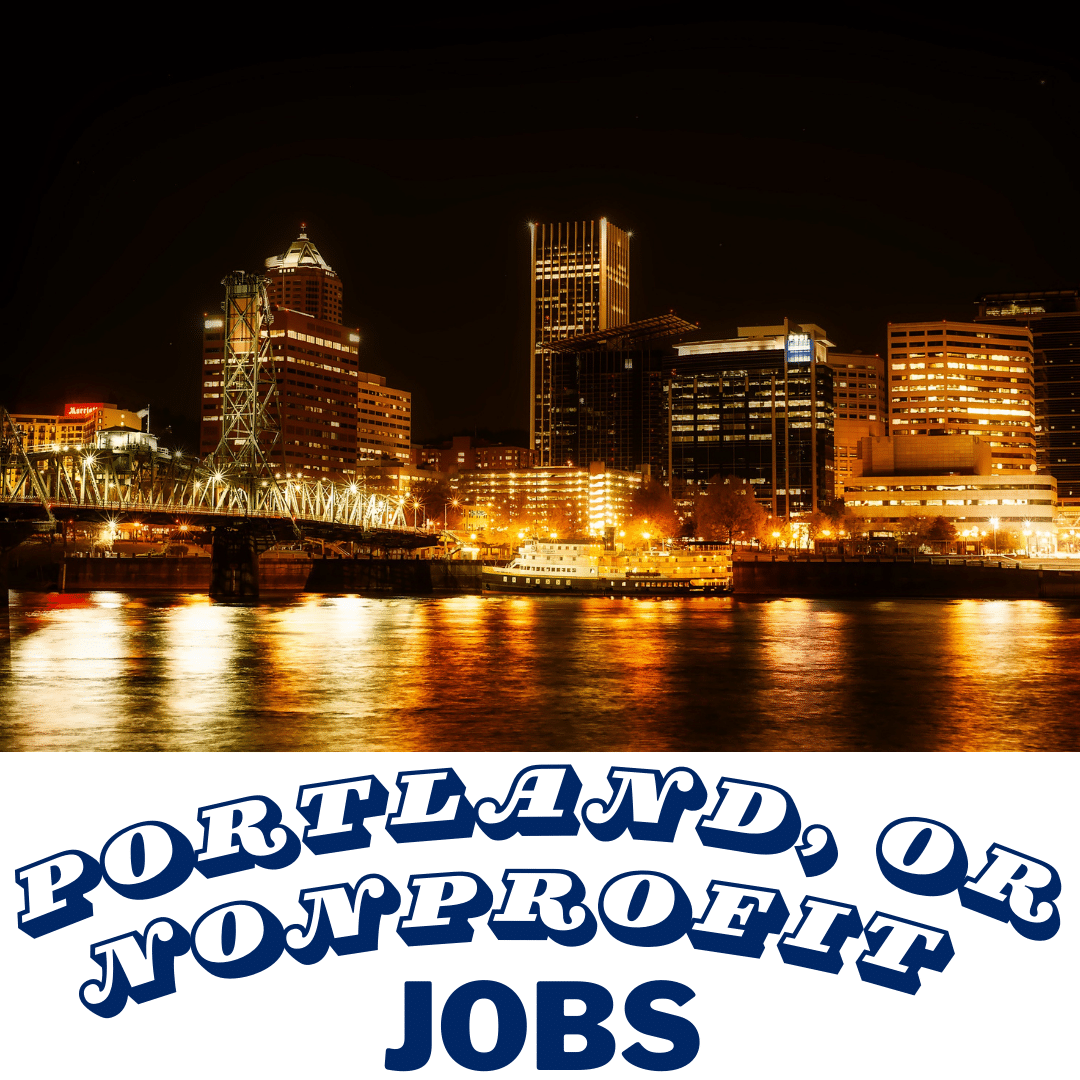
Portland's broader economy includes technology, apparel, advanced manufacturing, professional services, healthcare, logistics, hospitality, and creative industries. Those sectors produce talent with skills nonprofits need every day.
You do not need to start over to move into the nonprofit sector. The strongest transition strategy is usually to keep your professional specialty while learning the operating context of mission-driven organizations.
Portland combines a major professional market with distinctive neighborhoods, public transportation, nearby employment centers, and easy access to the wider Pacific Northwest. Your best location depends on where you work, how often you commute, and what you value outside of work.
Image source: City of Portland.
Portland's nonprofit landscape includes large institutions and locally rooted organizations. These examples show the variety of missions and employer types across the region.
Food access, hunger relief, community partnerships, policy, and operations.
International humanitarian relief and global development.
Animal welfare, education, veterinary services, and community programs.
Public media, journalism, education, and digital content.
Urban forestry, environmental stewardship, and community engagement.
Housing, shelter, homelessness response, and supportive services.
Performing arts, education, events, development, and cultural programming.
Nonprofit healthcare, clinical services, administration, and community health.
Community investment, partnerships, philanthropy, and regional initiatives.
These organizations are examples of the regional nonprofit ecosystem and are not presented as a complete list of current hiring organizations. Visit each employer directly for current openings.
Fundraising is one of the most transferable and consistently important career tracks across nonprofit organizations.
Portland-area employers need professionals who can build individual giving programs, cultivate major donors, secure institutional grants, manage corporate partnerships, grow annual campaigns, support capital initiatives, strengthen donor databases, and communicate measurable impact.
Fundraising careers also extend beyond traditional nonprofits. Healthcare systems, universities, schools, cultural institutions, advocacy organizations, and foundations all rely on development and philanthropy teams.
Healthcare nonprofits and nonprofit health systems employ far more than clinicians. They need professionals in finance, HR, technology, patient access, operations, compliance, fundraising, marketing, quality, facilities, project management, community health, and executive leadership.
For professionals who want mission-driven work without leaving a large organizational environment, healthcare can provide scale, defined career ladders, specialized departments, and complex operating challenges.
Colleges, universities, schools, youth organizations, and education nonprofits hire in advancement, admissions, student services, finance, HR, research administration, academic operations, technology, communications, career services, and program leadership.
Education can be especially appealing to professionals who value long-term community impact and structured institutional environments.
Many of Portland's most visible community challenges translate directly into nonprofit employment needs.
Supportive housing, shelter, homelessness services, property operations, case management, housing navigation, fundraising, advocacy, and program leadership.
Mental health services, substance-use treatment, crisis response, care coordination, peer support, clinical operations, and administrative leadership.
Food distribution, community partnerships, warehousing, logistics, policy, development, volunteer engagement, and nutrition programs.
Child and family programs, mentoring, after-school programs, youth development, foster support, education access, and family stability services.
Career coaching, job training, employer partnerships, adult education, program management, data, and economic mobility initiatives.
Legal aid, disability services, immigrant and refugee support, transportation access, language services, and community navigation.
Nonprofit salaries vary by organization size, budget, funding model, role complexity, professional specialty, and seniority. Rather than rely on a generic citywide salary estimate, compare each opportunity using current role-specific data.
The Nonprofit Association of Oregon's Compensation & Benefits Report draws on data shared by 311 charitable 501(c)(3) nonprofits and includes wages, benefits, job definitions, organization size, focus area, and geography. That makes it a useful Oregon-specific benchmarking resource.
For candidates, compensation should be evaluated alongside workload, flexibility, health insurance, retirement, paid time off, professional development, career advancement, leadership quality, and organizational stability.
| What to Compare | Questions to Ask |
|---|---|
| Base Salary | Is the range aligned with scope, experience, and current market data? |
| Healthcare | What share of premiums does the employer cover for employees and dependents? |
| Retirement | Is there an employer contribution or match, and when does it vest? |
| Paid Time Off | How are vacation, sick leave, holidays, wellness days, and sabbaticals structured? |
| Flexibility | Is the role onsite, hybrid, or remote, and is that policy stable? |
| Growth | What promotion paths, professional development, and learning budgets exist? |
| Workload | Are evenings, weekends, travel, events, or on-call responsibilities expected? |
Many nonprofit careers are built through relationships as much as applications. Portland offers multiple ways to deepen sector knowledge and become known within a cause area.
Join associations connected to fundraising, HR, finance, communications, healthcare, education, public policy, technology, or your mission area.
Choose volunteer work that builds relevant relationships or demonstrates skills you want to use professionally.
Board or committee work can build governance experience, deepen community relationships, and strengthen nonprofit fluency.
Conferences, trainings, fundraisers, public programs, policy events, and community meetings can help you understand organizations before you apply.
Ask professionals how their organizations operate, which skills are difficult to hire for, and what backgrounds translate successfully.
Nonprofit finance, grants, fundraising, board governance, evaluation, and compliance knowledge can accelerate a sector transition.
There is no single best place to live in Portland. The right choice depends on office location, hybrid schedule, transportation preferences, housing budget, school needs, and lifestyle.
Close-in urban living with restaurants, parks, transit access, and relatively convenient access to downtown employers.
Dense, central, and well connected to downtown. Often attractive to professionals prioritizing walkability and access to central-city employers.
Neighborhood business districts, parks, and a residential feel while remaining relatively close to central Portland.
Creative neighborhoods with local businesses, cultural activity, and access to community organizations.
Close-in neighborhoods with bike infrastructure, local business corridors, transit options, and access to central employers.
Modern residential development with transit connections and especially convenient access to OHSU and the broader healthcare corridor.
A major westside employment and residential center with MAX access, regional employers, and a range of housing types.
A growing westside community with technology employment, light rail service, and access to Washington County organizations.
A south metro community often researched by households prioritizing suburban amenities and specific school options.
Southwest metro housing and employment with regional highway access and proximity to both Portland and Washington County.
South of Portland with MAX Orange Line access, local neighborhoods, and proximity to employers in Portland and Clackamas County.
Across the Columbia River. It expands housing choices, but cross-river commute and tax implications deserve careful research.
A Portland nonprofit salary should be considered together with housing, transportation, healthcare, childcare, taxes, utilities, and the cost of the lifestyle you want.
Renting can make sense for newcomers who want time to understand commuting patterns and neighborhoods before buying. Compare lease terms, parking, transit access, utilities, and commute costs, not just monthly rent.
Homebuyers should compare property taxes, insurance, maintenance, commute time, school boundaries, and long-term location flexibility. Hybrid work can make farther-out communities more realistic, but policies can change.
Living farther from work may reduce housing costs but increase driving, parking, fuel, and time costs. A transit-friendly location may justify a higher rent for some households.
The broader region includes Portland, Beaverton, Hillsboro, Clackamas County communities, and Vancouver, Washington. Candidates should compare opportunities across the entire metro rather than limiting a search to Portland city limits. A strong job on the westside may make Beaverton or Hillsboro more convenient. A role near downtown may favor close-in Portland or transit-connected neighborhoods. A Vancouver resident may have different tax and commute considerations than an Oregon resident.
School boundaries, programs, enrollment rules, transportation, and performance measures can change. Families considering Portland, Beaverton, Lake Oswego, Tigard, Hillsboro, Milwaukie, Vancouver, or another nearby community should verify the school assigned to a specific address directly with the applicable district.
Look beyond rankings. Consider program offerings, special education resources, extracurriculars, language programs, class sizes, commute, after-school care, and how the location fits your household's daily schedule.
Early-career professionals may prioritize transit, walkability, access to restaurants and events, roommates, professional networking, and flexibility to change employers without moving.
Close-in neighborhoods can make it easier to attend nonprofit events, volunteer, meet peers, and access multiple employment centers, though housing costs and space tradeoffs should be considered carefully.
Portland's nonprofit sector offers different entry points depending on where you are in your career. The strongest strategy is to build on the experience you already have while adding mission-driven context, relationships, and sector knowledge.
Internships, AmeriCorps-style service, campus organizations, volunteer roles, part-time nonprofit jobs, fellowships, and project work can create the first experience needed for a full-time nonprofit career.
Look for opportunities that let you build concrete skills in fundraising, program coordination, communications, data, volunteer management, research, community engagement, operations, or administration. A smaller organization may give an early-career professional broader responsibility sooner.
Mid-career candidates often add the most value by bringing established expertise in finance, HR, technology, operations, marketing, sales, project management, legal, or leadership into a mission-driven setting.
The goal is usually not to abandon your professional identity. It is to translate it. Show how your experience improved revenue, systems, teams, customer or community experience, efficiency, risk management, growth, or organizational performance.
Executive roles can require fundraising, board partnership, strategy, finance, operations, public presence, and people leadership. Demonstrating mission fluency alongside measurable leadership results is essential.
Senior candidates should be prepared to discuss governance, organizational sustainability, revenue diversification, staff culture, community relationships, board dynamics, and the balance between mission ambition and financial discipline.
Executive leadership is not limited to the Executive Director or CEO. Larger organizations may have sophisticated leadership teams responsible for finance, operations, development, programs, people, technology, marketing, legal, and strategy.
Mission strategy, board partnership, organizational leadership, external representation, revenue strategy, culture, and accountability.
Systems, people, facilities, technology, risk, administration, program infrastructure, and organizational scaling.
Budgeting, audit, grants, restricted funds, forecasting, controls, board reporting, financial strategy, and compliance.
Fundraising strategy, major gifts, campaigns, grants, institutional giving, donor stewardship, and development operations.
The strongest relocation decision connects your career opportunity with housing, transportation, family needs, finances, and the likelihood that your work arrangement will remain stable.
Identify the exact workplace location, expected in-office days, parking options, transit access, and whether the organization may relocate.
Include at least one close-in neighborhood, one suburban option, and one transit-oriented option when practical.
Use actual weekday travel times. A route that looks easy on a map can behave very differently during peak periods.
Include housing, utilities, taxes, transportation, insurance, childcare, healthcare, parking, and recurring lifestyle costs.
For families, confirm school assignments and enrollment rules directly with districts before signing a lease or purchasing a home.
Do not assume a current remote or hybrid arrangement is permanent. Ask how policy decisions are made and whether office expectations are likely to change.
TriMet operates buses, MAX light rail, and other regional services. Portland also has substantial bicycle infrastructure and multiple employment centers that can make commute planning very location-specific.
For nonprofit employees, employer-provided transit passes, bike facilities, parking subsidies, flexible start times, and hybrid scheduling can materially change the value of a job offer.
Cross-river commuting between Vancouver and Portland deserves special attention. Travel times can vary, and tax considerations may differ depending on where you live and where you work.
Remote and hybrid work can expand the number of organizations available to Portland professionals, but location restrictions still matter.
Some remote employers hire only in states where they already maintain payroll, tax, insurance, and employment registrations.
National remote roles may still require staff retreats, board meetings, donor visits, conferences, or regular travel.
Understand whether remote status is written into the position, tied to current leadership, or subject to future office requirements.
Quantify fundraising growth, people served, budgets managed, programs launched, retention gains, partnerships built, costs reduced, or systems improved.
Explain why the organization's work matters to you and how your professional experience can help advance its goals.
Mirror relevant terminology from the posting and make your strongest transferable skills easy to identify.
Understand whether the organization depends on philanthropy, grants, government contracts, earned revenue, membership, healthcare reimbursement, or a mix.
Attend sector events, volunteer, participate in professional groups, and engage with organizations before you urgently need a new role.
Ask about leadership, funding stability, workload, board engagement, turnover, strategic priorities, and how success will be measured.
How stable is the leadership team, and what does the board expect from this role?
How is the position funded, and is that funding ongoing, restricted, grant-dependent, or time-limited?
What are normal hours, peak seasons, events, travel requirements, and after-hours expectations?
What should the person in this role accomplish in the first six to twelve months?
How are decisions made, how is feedback handled, and how does leadership respond when priorities conflict?
Why is the role open, how long did the previous person stay, and what has team turnover looked like?
What are the actual onsite expectations, and how much control does the employee have over scheduling?
What professional development, promotion, mentorship, and leadership opportunities are available?
Explore nonprofit, foundation, education, healthcare, association, and mission-driven opportunities. Review each listing for location and work-arrangement details.
Portland nonprofits compete with healthcare systems, government agencies, universities, technology companies, professional services firms, and national remote employers for experienced talent. A strong mission alone may not be enough.
Clear salary information helps candidates assess fit early and can reduce wasted interviewing time.
Avoid turning every desirable skill into a required qualification. Focus on what the person truly needs to succeed.
Describe the organization's impact, the population or cause served, and how this specific role contributes.
State onsite, hybrid, remote, travel, schedule, and geographic expectations directly.
Long gaps and excessive interview rounds can cause strong candidates to accept other opportunities.
Benefits, leadership, flexibility, learning, advancement, organizational stability, and role scope all affect acceptance decisions.
The strongest recruiting strategy combines clear positioning, realistic qualifications, competitive total rewards, and visibility among people intentionally seeking nonprofit work.
Portland employers can widen talent pools by considering professionals from adjacent sectors. Technology talent can support CRM, cybersecurity, systems, data, and digital transformation. Corporate finance professionals can strengthen budgeting, reporting, and planning. Private-sector marketers can bring audience development and brand expertise. Operations leaders can help growing nonprofits build scalable systems.
When nonprofit experience is truly required, say why. When it is only preferred, evaluate whether transferable experience could produce an equally strong hire.
Sector research, nonprofit education, compensation resources, professional development, and nonprofit community information.
Use route planning and service information when comparing job locations, neighborhoods, and commuting options.
Search nonprofit and mission-driven jobs nationally, explore career resources, or post an opening to reach nonprofit professionals.
Use Foundation List as more than a job board. Research nonprofit career paths, improve your search strategy, and stay open to opportunities across locations and mission areas.
Browse nonprofit, foundation, education, healthcare, association, and mission-driven opportunities.
Access Foundation List's broader nonprofit career and hiring resources.
Reach mission-driven candidates by posting nonprofit openings on Foundation List.
Foundation List serves nonprofit job seekers and employers across the United States. Explore the national job search for opportunities in Portland and other mission-driven markets.
Foundation List features nonprofit and mission-driven opportunities from organizations in Portland, across Oregon, and throughout the United States. Use the job search on this page and review each listing for location, hybrid, and remote-work requirements.
The Nonprofit Association of Oregon reports 190,400 nonprofit jobs and 10,500 nonprofit establishments with employment and payroll in Oregon.
Portland nonprofits hire across program management, fundraising and development, finance, accounting, operations, HR, communications, marketing, technology, healthcare, education, advocacy, research, community engagement, grants, data, and executive leadership.
The Portland region has substantial activity in healthcare, human services, housing, education, youth development, environmental work, arts and culture, philanthropy, public media, advocacy, food systems, community development, and international humanitarian work.
Not always. Many employers value transferable experience from business, government, education, healthcare, technology, and other sectors. Candidates should clearly connect their accomplishments and professional skills to the organization's mission and operating needs.
Keep your strongest professional specialty, learn nonprofit terminology and funding structures, show measurable outcomes, explain your mission connection, and build sector context through volunteering, board service, networking, or project work.
Compensation varies substantially by job function, seniority, organization size, budget, mission, and funding model. Compare salary with benefits, workload, flexibility, professional development, retirement, and advancement. Oregon-specific compensation research can provide additional context.
Portland provides access to a broad Oregon nonprofit sector and a diverse mix of healthcare, education, environmental, social-service, cultural, philanthropic, and community organizations. Whether it is the right market for you depends on your specialty, salary requirements, housing preferences, commute, and mission interests.
The best location depends on the workplace and your lifestyle. Candidates often compare close-in Portland neighborhoods with Beaverton, Hillsboro, Tigard, Lake Oswego, Milwaukie, and Vancouver. Compare housing, transportation, school needs, and actual commute times before deciding.
Families should verify school assignments directly with school districts, compare childcare, housing, commute, healthcare, recreation, and neighborhood services, and visit potential neighborhoods at different times of day when possible.
Yes. Some nonprofit roles are remote or hybrid, while others require regular onsite work because of programs, healthcare, community engagement, events, facilities, or team operations. Verify the work arrangement and any state-residency requirements in each posting.
Strong career paths include fundraising, finance, operations, HR, program management, healthcare, community services, education, communications, technology, data and evaluation, advocacy, and executive leadership.
Lead with measurable results, tailor language to the posting, connect your work to mission impact, and show relevant experience with budgets, grants, donors, programs, stakeholders, teams, systems, or community engagement when applicable.
Clear compensation, realistic requirements, specific work-arrangement expectations, meaningful benefits information, a compelling explanation of mission impact, and an efficient hiring process can make a posting more competitive.
Only when the role truly depends on nonprofit-specific knowledge. Many positions can benefit from strong transferable experience from healthcare, technology, business, government, education, and other sectors.
Search Portland nonprofit jobs and national mission-driven opportunities, or reach nonprofit professionals by posting your next opening on Foundation List.